
Likidite Sağlayıcı
Broker'ınızı likiditeye, Bridge'e, fiyatlandırmaya, emir gerçekleştirmeye ve risk yönetimine bağlamak — gerçek bir forex broker altyapısının kritik bir parçası.
- Liquidity Provider
- Bridge
- MT4 / MT5
- A-Book / B-Book
- FIX 4.4
- Risk Management
Liquidity Providers
Bank LP
Non-Bank LP
Crypto LP
Bridge / Aggregator
FIX 4.4 · Order Routing · Pricing
MT4 / MT5 Server · Symbol Groups · Spread Markup
A-Book Flow
Routed to LP
B-Book Flow
Internalized
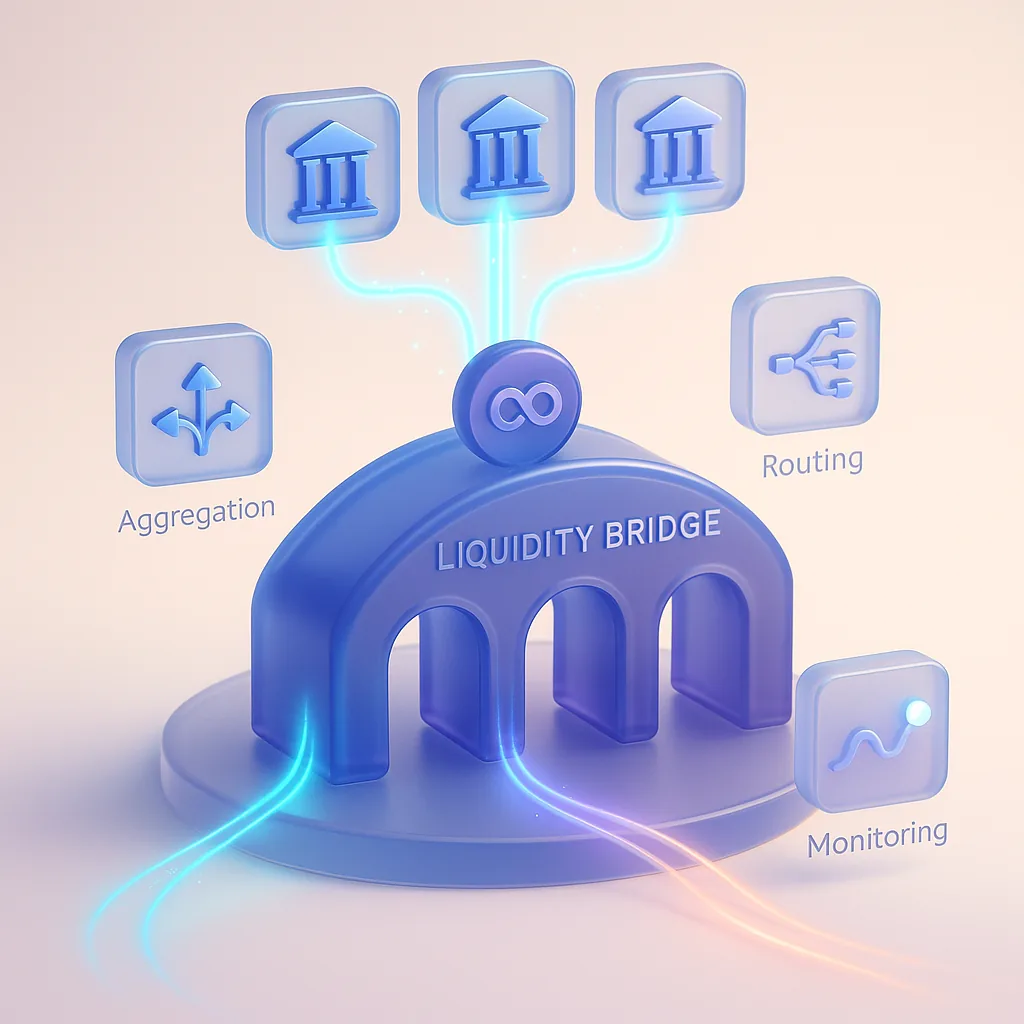
Likidite Sağlayıcı ve bir forex broker'a nasıl bağlanır
Bir Liquidity Provider için nihai amaç, forex broker'larının müşteri emirlerini limit veya gecikme olmadan gerçekleştirmelerine yardımcı olmaktır. Likidite sağlayıcı firmalar, işlem için büyük hacimde finansal varlığı kullanıma sunar.
Bu varlıklar çeşitli döviz paritelerini, emtiaları, hisse senetlerini ve hatta kripto paraları içerebilir. Bir forex broker'ın altyapısında LP — Bridge, işlem sunucusu ve risk motoruyla birlikte — emir gerçekleştirmenin temel bileşenlerinden biridir.
Likidite Sağlayıcı nedir?
LP, forex broker'ların müşteri emirlerini limit veya gecikme olmadan gerçekleştirmesine yardımcı olan bir likidite kaynağıdır.
Liquidity Provider firmaları, büyük hacimde finansal varlığı bir araya getirerek broker'ın emirleri gerçek piyasa derinliğine karşı gerçekleştirmesini sağlar. Bu kaynaklar banka, banka dışı veya kripto odaklı olabilir ve standart protokoller (FIX 4.4 gibi) aracılığıyla Bridge'e ve nihayetinde broker'ın sunucusuna bağlanır.
Depth
Piyasa derinliği
Büyük emirlerin sert fiyat hareketleri olmadan gerçekleştirilebilmesi için erişilebilir yüksek hacimli finansal varlık.
Fast Execution
Hızlı emir gerçekleştirme
Broker'dan likidite kaynağına düşük gecikme — daha iyi işlemci deneyimi ve daha sıkı slipaj kontrolü.
Multi-Asset Pricing
Çoklu varlık fiyatlandırması
FX, metaller, endeksler ve kripto için aynı emir gerçekleştirme yolu üzerinden fiyat akışı, eşleşen Symbol Groups ile.
Likidite Sağlayıcı'nın forex piyasasındaki kilit rolü
Likidite sağlayıcı olmadan, büyük işlemler sert fiyat dalgalanmaları yaratabilir. LP, emir gerçekleştirme yolu boyunca gereken derinliği ve fiyat istikrarını sağlar.
Likidite sağlayıcılar olmasaydı, forex piyasasındaki büyük işlemler sert fiyat dalgalanmalarını tetikleyebilirdi. Bir varlığı kayda değer bir fiyat etkisi yaratmadan alıp satmak yalnızca bir LP'nin yardımıyla mümkündür.
Bu bağlantının doğrudan sonucu: daha akıcı emir gerçekleştirme, daha iyi bir kullanıcı deneyimi ve broker'ın müşterileri için daha hızlı, daha isabetli işlemler. Uygulamada Bridge, MT5 sunucusu ve emir gerçekleştirme grupları bu akışı kontrollü biçimde yönetir.
Emir gerçekleştirme yolu
- Order Flow
- Bridge
- LP
- Execution
Likidite Sağlayıcı türleri
Forex ve kripto likidite sağlayıcılarının üç ana kategorisi — her biri farklı bir emir gerçekleştirme modeli ve derinlik profiliyle.
Banka likidite sağlayıcıları
Bank LPs
Bankalar, forex piyasasındaki en büyük likidite sağlayıcılardır. Derin likidite, geniş parite kapsamı ve emir gerçekleştirme istikrarı — özellikle ana seanslarda.
Örnekler
- JP Morgan
- Citibank
- Deutsche Bank
Banka dışı likidite sağlayıcıları
Non-Bank LPs
Ultra hızlı emir gerçekleştirme ve sıkı spread sunan uzman market maker firmalar — genellikle düşük gecikmeli teknoloji ve fiyatlandırma algoritmaları kullanır.
Örnekler
- XTX Markets
- Citadel Securities
Kripto likidite sağlayıcıları
Crypto LPs
Bitcoin ve Ethereum gibi kripto paralar için likidite konusunda uzmanlaşmış firmalar. Crypto CFD veya spot sunan broker'lar için doğru yol.
Örnekler
- BTC / ETH desks
Listelenen isimler yalnızca sektörde tanınan örnekler olarak verilmiştir ve BrokerLauncher ile bu kuruluşlar arasında doğrudan bir ortaklık anlamına gelmez.
Likidite Sağlayıcı kullanmanın avantajları
Forex broker'ları neden doğru bir LP bağlantısına ihtiyaç duyar.
Fast Execution
Hızlı işlem gerçekleştirme
Platformdan likidite kaynağına düşük gecikme — kontrollü slipaj ve yüksek emir gerçekleştirme kalitesi.
Tight Spreads
Daha sıkı spreadler
LP'den rekabetçi fiyat akışları, müşteri grubuna göre yapılandırılabilir Spread Markup ile.
Higher Volume
Daha yüksek işlem hacmi
Büyük emirleri olumsuz fiyat etkisi olmadan gerçekleştirme kapasitesi — broker büyümesi için kritik.
Multi-Asset
Varlık çeşitliliği
Tek bir Bridge ve tek bir birleşik emir gerçekleştirme yolu üzerinden FX, metaller, endeksler ve kripto CFD'leri.
Bir broker Likidite Sağlayıcı'ya nasıl bağlanır
Bir broker altyapısını LP'ye bağlamak için dört teknik adım — seçimden izlemeye.
- 01
Likidite Sağlayıcı seçimi
Temel faktörler: emir gerçekleştirme hızı, spread, komisyon, reject oranı, piyasa derinliği, varlık sınıfı kapsamı ve LP istikrarı.
- 02
Bridge kurulumu
Bridge aradadır; müşteri emirlerini LP'ye iletir ve fiyatları sunucuya geri döndürür. Sektörde tanınan örnekler: OneZero ve PrimeXM.
- 03
Sunucu ve işlem platformu yapılandırması
MT4 veya MT5, fiyat akışını almak ve emir gerçekleştirme, Symbol Groups ile Spread Markup işlemlerini yönetmek için hassas biçimde yapılandırılmalıdır.
- 04
Risk ve işlem yönetimi
Bağlantı kurulduktan sonra exposure, reject ve slipaj için gerçek zamanlı izleme, A-Book / B-Book / hibrit emir gerçekleştirme ile birlikte kurulur.
Likidite Sağlayıcı'ya bağlanmanın zorlukları
Doğru yapılandırma olmadan, bir LP bağlantısı gecikme, zayıf emir gerçekleştirme ve istikrarsız risk oluşturabilir.
Emir gerçekleştirme gecikmesi
Bridge veya LP'ye giden FIX bağlantısı yanlış yapılandırılırsa, gecikme (latency) artar ve müşteriler için emir gerçekleştirme kalitesi düşer.
Maliyet ve bağlantı karmaşıklığı
Bridge maliyeti, LP sözleşmeleri, izleme ve bakım, broker'ın emir gerçekleştirme modeliyle uyumlu olmalıdır. Net bir sermaye ve operasyon planı gereklidir.
Likidite yönetimi
Dalgalı seanslarda likidite kapsamının sağlanması, istenmeyen reject'lerin önlenmesi ve broker tarafında exposure kontrolü.
Doğru teknik yapılandırma
Symbol mapping, teminat, kaldıraç kademeleri, Spread Markup ve A/B-Book kuralları, broker'ın risk politikasıyla uyumlu olmalıdır.
Likidite akışının sürekli izlenmesi
Slipaj, reject oranı, last look, spread anomalileri ve LP derinliği, müşterinin emir gerçekleştirme yolunun istikrarlı kalması için sürekli izlenmelidir.
BrokerLauncher likidite bağlantısında nasıl yardımcı olur
LP seçiminden ve Bridge kurulumundan MT5, Spread Markup ve routing kurallarının yapılandırılmasına kadar — tüm emir gerçekleştirme yolu uçtan uca yönetilir.
Broker'ın ihtiyaçlarının ve emir gerçekleştirme modelinin incelenmesi
Varlık sınıfına göre doğru LP bağlantı yolunun seçilmesi
MT5 sunucusuna bağlı Bridge'in (FIX 4.4) koordinasyonu ve kurulumu
Symbol Groups ve teminat/kaldıraç kademeleri dahil MT4/MT5 kurulumu
Müşteri grubuna göre yapılandırılabilir Spread Markup
Commission kurulumu ve A-Book / B-Book / hibrit routing kuralları
Go-Live öncesi gerçek senaryolarda emir gerçekleştirme testi
Slipaj, reject, exposure ve günlük risk izleme
İlgili hizmetler
Forex broker kurulumu
Kayıttan Go-Live'a kadar eksiksiz altyapı.
MetaTrader 5 lisansı
MT5 sunucusu temini ve kurulumu.
Brokera özel CRM
MT5'e bağlı müşteri kabini ve yönetim paneli.
Kripto ödeme geçidi
Yatırma ve çekme için USDT-TRC20.
Drawdown eklentisi
Equity stop-out ve işlemci risk kontrolü.
Prop trading kurulumu
Challenge, kural motoru ve payout.
Borsa API
İşlem altyapısı ve piyasa verisi.
Şirket yasal bilgileri
- LAUNCHER EXPERT PROJECT MANAGEMENT SERVICES — Lisans No. 1425596 — BAE, Office No. 1-141-411, Property of Al Waleed Investors (LLC), Dubai/UAE
- BL Solutions Group Ltd — Şirket No. 15919941 — Birleşik Krallık, 71-75 Shelton Street, Covent Garden, London, WC2H 9JQ, United Kingdom
Likidite bağlantısının teknik mimarisi
Fiyat ve emir akışını likidite kaynağından broker'ın risk motoruna kadar taşıyan altı katman.
Layer 01
Price Feed / Market Data
Likidite kaynaklarından Bridge'e gerçek zamanlı fiyat akışları — işlem platformu için fiyat keşfinin temeli.
Layer 02
Liquidity Provider
A-Book'a yönlendirilen emirleri gerçekleştiren birincil likidite kaynağı (banka / banka dışı / kripto).
Layer 03
Bridge / Aggregator
Birden fazla LP'den fiyatlandırmayı bir araya getirir, akıllı routing yapar, last look'u yönetir ve LP ile broker sunucusu arasındaki FIX 4.4 protokolünü yönetir.
Layer 04
MT4 / MT5 Server
Emir gerçekleştirme, işlem hesapları, teminatlar, symbol mapping ve Manager API ile iletişim için ana motor.
Layer 05
Broker Groups / Symbols / Markups
Müşteri gruplama, Spread Markup, komisyon, kaldıraç kademeleri ve gruba özel emir gerçekleştirme kuralları.
Layer 06
Client Orders / Risk Engine
Müşteri emirleri risk motoruna girer; A-Book / B-Book / hibrit yolu risk kurallarına göre belirlenir.
Likidite Sağlayıcılar hakkında sıkça sorulan sorular
Broker'ınızın likidite bağlantısını teknik olarak inceleyin
Danışmanlık görüşmesinde emir gerçekleştirme modelinizi, Bridge, LP, sembolleri, spreadleri, komisyonları, A-Book / B-Book ve broker'ın risk gerekliliklerini inceliyoruz.